
Enhancing AI Candidate Experience: Key Strategies for Employers in 2026
- Niharika Deshpande
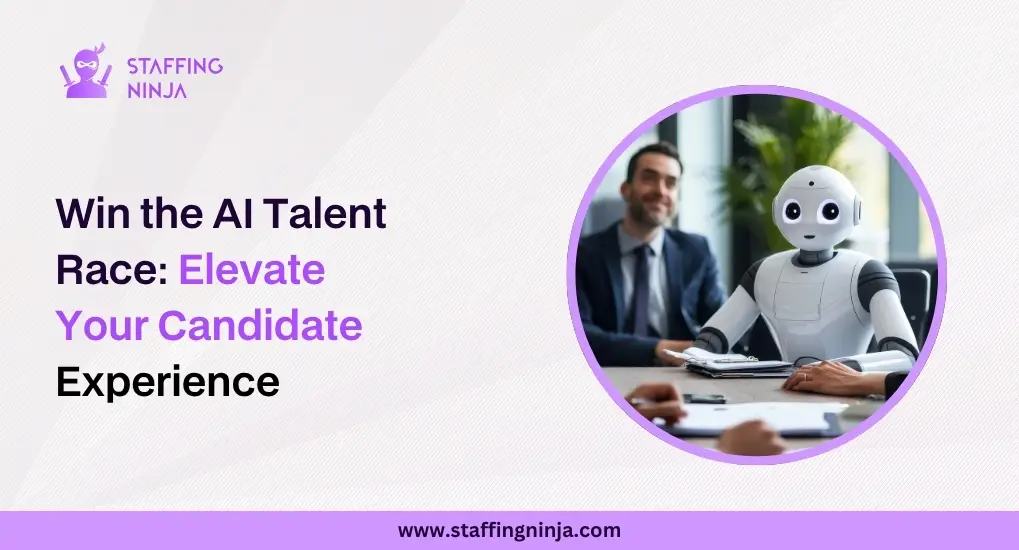
The world of hiring is becoming dynamic, and the process of candidate selection is continuously evolving. Artificial intelligence devices are changing how organizations reach out to job seekers today, and the transformation is ever-increasing. Employer experience is now a significant competitive standard because effective hiring experiences create long-term trust. With AI becoming the core of the recruitment process, employers need to pay attention to one-on-one, transparent, and equalized communication. Accordingly, the AI candidate experience in 2026 should be enhanced to efficiently and consistently attract talented specialists.
What Is AI Candidate Experience?
The AI candidate experience explains how candidates feel using AI tools in the hiring process. Unlike conventional recruitment, technology is used to facilitate the majority of the initial stages of the procedure. They tend to interact with AI before interacting with a recruiter. The typical AI touch points are chatbots, which are used to answer questions, screen resumes, compare profiles, and to schedule interviews. These chatbots define the perception of the applicant to a company before human interaction, and the contemporary process is accelerated and directed.
3. Industry Expertise and Market Knowledge
Recruitment agencies may make the recruitment process more streamlined and find experts for your company from their long lists of professionals. Hiring a recruitment agency provides salary benchmarks, hiring trends, and market data that eventually filter job descriptions and enhance hiring accuracy.
Why AI Candidate Experience Matters in 2026?
Talent expectations are also increasing because individuals are becoming acquainted with modern digital devices across the globe. As such, employers are expected to provide experiences that are time-conscious and rely on effective communication. Applicant opinions are formed based on every interaction, and first impressions determine overall brand perception. Therefore, companies need to make sure that their recruitment processes look contemporary, unbiased, and impartial. After all, good experiences lead to improved outcomes and enduring talent engagements. These trends also mirror the changing expectations, such as Candidate experience in 2025.
Common Challenges in AI-Powered Hiring
AI enhances recruitment, but it also raises new issues in businesses. First, excessive automation eliminates the human touch that most applicants seek in high-pressure situations during the application process. Consequently, when the applicants get automated responses only, they can experience neglect. AI algorithms can be biased accidentally due to the unreasonableness of training data or a lack of diversity. This problem can affect screening decisions and lower trust. Third, the issue of data privacy is a concern because AI technologies gather data at several stages, which many applicants fear.
Therefore, employers need to describe their usage of data, as well as the duration of its retention. If these challenges are left unaddressed, the AI recruitment process will be confusing and discouraging to applicants.
Key Strategies to Enhance AI Candidate Experience
Simple and human-centered improvements can help companies build trust among the candidates.
- Personalization: Employers should use AI insights to personalize messages and interview guidance. Moreover, personalized updates will make the candidates feel appreciated at every step.
- Transparency: Recruiters need to specify how AI tools are helpful in terms of screening, matching, and communication. Thus, direct communication will cut down misinterpretations and develop trust.
- Human + AI Balance: Despite the fact that AI makes processes faster, human empathy makes the process more understanding. Due to this, companies are supposed to consider both automating and personal check-ins.
- Real-Time Feedback: AI systems can provide prompt feedback on application status. Therefore, applicants remain updated, which minimizes anxiety and waiting time.
- Ethical AI Practices: Employers should use fairness regulations, inclusive scoring practices, and uphold conformity. As ethics influence the trust of the population, open policies help to make a more effective choice in hiring.
Since these strategies complement each other, companies will establish a cozy, efficient, and respectful hiring experience that meets the expectations in 2026.
Future Trends: What’s Next for AI Candidate Experience in 2026 and Beyond
The trend of AI is still growing, and the tools will transform the hiring process in the next several years. This will be due to predictive analytics to enable employers to discover the perfect talent at a young age so that they can make quick and smart hiring choices. Moreover, sentiment analysis and emotion AI can be present in online interviews to enhance the level of understanding of the discussion.
AI applications will track the candidates post-hiring through career path recommendations and post-hiring engagement. These innovations are rapidly evolving, and therefore, the employer has to keep up with the times in order to stay ahead of the competition. Due to the change in industries, AI talent acquisition will be based on advanced systems to ensure workforce development in the future.
Conclusion: Humanizing the AI Hiring Journey
AI will continue to change the way companies find and connect talent, but it is essential to keep human warmth at the center. Thus, automation must be accompanied by empathy and fairness, which will help employers establish trust. Through the process of remaining open, honest, and welcoming, organizations establish a hiring process that honors all their candidates. These principles help companies adopt a healthier future of recruitment by co-working with an AI Recruitment agency where necessary.
Get in Touch Today
Recent Posts
Never Miss an Update!
Stay updated with hiring trends

- +91 9428586367
- contact@staffingninja.com
- 2108 A, Business Central Towers, Dubai Media City, Dubai, UAE
Company
Quick Link