
Remote Work Models: Adapting Staffing Strategies for a Hybrid World
- Niharika Deshpande
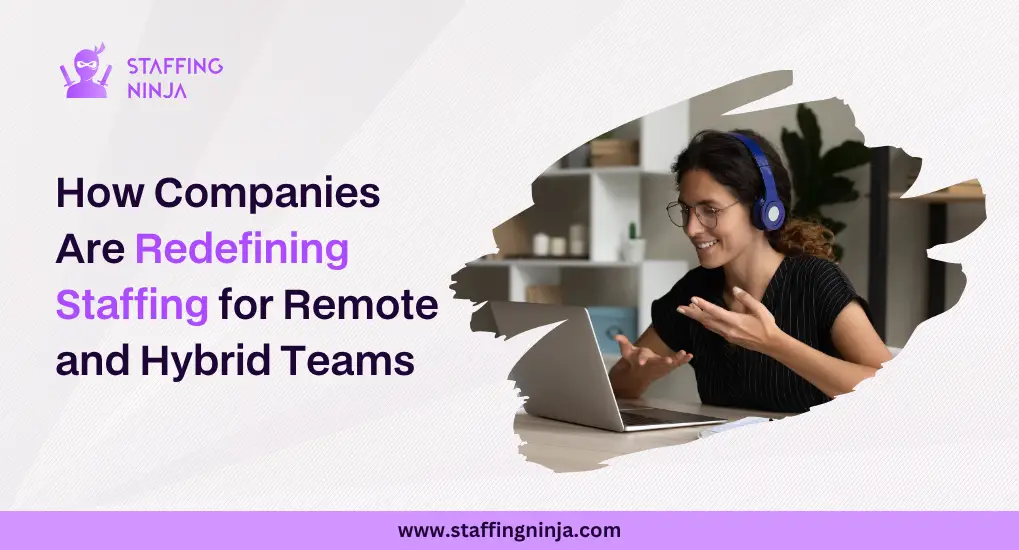
Global factors like technological improvements and the desire for more flexibility have influenced the rapid growth of remote work and hybrid workforce models. As companies adopt new ways of working, traditional staffing strategies are being tested. Now, organizations must reconsider how they hire, lead, and retain talent in a world where employees no longer share common systems. In the current scenario, staffing needs to account for flexibility and technology to align with the current needs of a distributed work force. With remote work models evolving rapidly, managing hybrid teams can be challenging, so employers need to turn towards newer strategies for all their staffing needs.
The Rise of Remote Work and the Hybrid Workforce
Remote work has shifted from a temporary measure to the norm, thanks to workplace culture changes and technological advancements. What began as a necessity during global disruption has now become a preference for many employees. The hybrid workforce – part in-office, part remote has emerged as the sweet spot for businesses that want to stay agile while maintaining a strong company culture. With employees expecting flexible conditions, there’s a growing demand for workplace adaptability in the current job market.
Common Remote and Hybrid Models in Practice
- Fully remote: The staff is entirely remote, providing a maximum level of flexibility and access to talent around the world.
- Hybrid-flex (employee chooses days in-office): Staff can work in the office or remotely if they wish, giving them flexibility and keeping them connected.
- Hybrid-fixed (specific days in-office): Workers must be in the office on certain days; hybrid work with face-to-face meetings.
- Remote-first with optional office access: Staff work remotely, but have the opportunity to use the offices for collaboration.
Key Staffing Challenges in a Distributed Work Environment
1. Time zone coordination and collaboration
Leading virtual teams in various time zones can slow down communication and hinder teamwork. A key to successful teamwork involves aligning working hours with all members of the team.
2. Building team culture across distances
Building a cohesive company culture from afar means making an intentional effort to connect, whether it’s through remote work, virtual team-building activities, simply over regular communication.
3. Managing productivity and performance remotely
Monitoring performance remotely can be a tedious task. Employers need to provide clear objectives, trust that employees can meet them, and give them the tools they need to be their most productive selves.
4. Complying with local labor regulations
Companies have to keep up with different labor laws in different regions when dealing with a distributed workforce.
Strategic Staffing Adaptations for the Hybrid Era
Staffing adaptation is essential for success with a hybrid workforce. This includes redefining job descriptions to suit both remote and in-office roles. Soft skills such as self-management and communication are also increasingly critical. By recruiting with hybrid needs in mind, companies gain access to a wider talent pool while offering candidates greater choice. In addition, incorporating contingent and freelance talent allows businesses to remain agile and respond quickly to shifting demands.
Tools and Technologies Enabling Remote Staffing Success
- Collaboration tools (Slack, Teams, Zoom): These apps make it easy for remote workers to maintain communication and make others feel as if they are working in a team.
- Productivity/project management solutions (Asana, Trello, Monday): These systems help coordinate and monitor team activities, enabling remote work projects to run smoothly and efficiently.
- Cloud-based HR and onboarding software: Cloud-based products that simplify the hiring, onboarding, and management of employees can help remote teams be more efficient and consistent.
How Staffing Services Are Adapting to the Remote Work Landscape
1. Retooling for Hybrid Hiring
Staffing services now not only offer access to remote-ready pools of talent, but they also help companies navigate the legal and logistical challenges associated with hybrid models and help implement them effortlessly.
2. Candidate Vetting and Cultural Alignment
Today’s staffing services also vet candidates rigorously, with a focus on culture fit and identifying remote-readiness to ensure people are set up to be successful in hybrid or remote work scenarios.
3. Ongoing Support and Workforce Flexibility
Staffing works the same as usual, with all the flexibility it provides to adapt to fast-changing business requirements and teamwork that remains strong even when remote.
Building a Future-Ready Hybrid Talent Strategy
As the hybrid workforce transforms businesses, flexible adaptation of staffing strategies are becoming essential for long-term success. Technology and expert partners such as staffing agencies play a crucial role in supporting transitions and aligning remote policies with organizational goals. For sustainable growth, companies must also train employees to excel in hybrid environments and create inclusive experiences that unite both in-office and remote workers. Ultimately, cultivating a future-ready workforce means embracing flexibility, adaptability, and inclusivity as core strengths.
Get in Touch Today
Recent Posts
Never Miss an Update!
Stay updated with hiring trends

- +91 9428586367
- contact@staffingninja.com
- 2108 A, Business Central Towers, Dubai Media City, Dubai, UAE
Company
Quick Link